
Introduction: Sorting Through the Maze of Cable Trays
Let’s face it—when you’re dealing with large-scale cable setups, things can get messy fast. That’s where MS cable management systems come in, offering a way to organize and secure electrical cables safely and neatly. But then comes the big question: Which cable tray type should you choose—MS perforated or MS ladder-type?
This guide will walk you through a clear cable tray types comparison, diving deep into the perforated MS cable tray benefits, ladder MS cable tray advantages, and real-world applications you might not have considered.
Whether you’re managing cabling for a data center, renewable energy setup, commercial kitchen, or a factory floor, this blog has you covered.
What Are MS Cable Trays, Anyway?
MS, or Mild Steel, is a popular choice for manufacturing cable trays due to its reliable performance in both indoor and outdoor environments. MS trays are usually finished with coatings like powder coating or hot-dip galvanizing to enhance their usability in different environments.
MS cable trays come in several forms, but the two most common types we’ll focus on here are:
- MS Perforated Cable Trays
- MS Ladder-Type Cable Trays
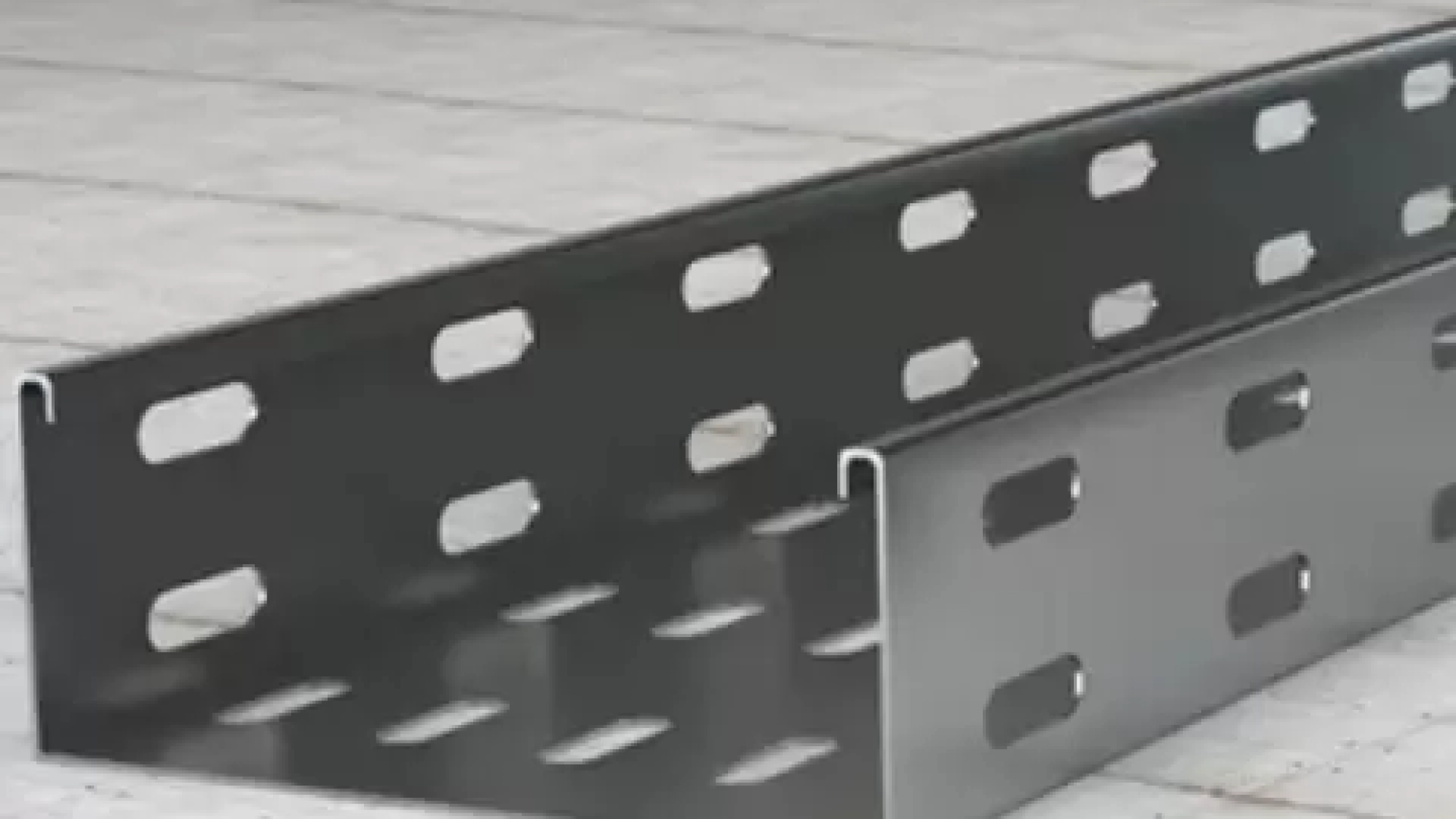
MS Perforated Cable Tray Benefits
These trays feature a flat base with evenly spaced slots or holes across the surface for efficient support and ventilation. They’re ideal for routing low to medium-volume cable loads, especially in environments where heat dissipation and ventilation are essential.
Key Benefits of MS Perforated Trays:
- Improved Airflow for Heat-Sensitive Cables
The perforations allow natural ventilation, keeping cables cooler, especially when you’re dealing with sensitive data or signal wires. - Easy Cable Distribution and Access
These trays make it simple to separate, tie, and access cables at multiple points. - Ideal for Interior Applications
Common in places like office buildings, schools, hospitals, and telecom setups. - Neat and Organized Appearance
The uniform design helps maintain a clean and professional look—perfect for environments where visibility matters.
Where to Use Perforated Trays:
- IT Rooms and Data Centers
- Commercial Complexes
- Retail Units
- Renewable Energy Projects (like rooftop solar setups)
- Clean rooms or laboratories
Ladder MS Cable Tray Advantages
Ladder-type trays resemble—you guessed it—a ladder.They consist of two longitudinal side rails joined by rungs placed at regular intervals. This structure is excellent for long runs of heavier cable bundles.
Key Advantages of Ladder-Type Trays:
- Excellent Ventilation with Open Design
The open rung structure allows for ample airflow and helps prevent overheating during power transmission. - Supports Long, Heavy Cable Runs
Great for power cables that require support over long horizontal distances without sagging. - Simplified Installation and Routing
Cables can enter or exit the tray at any rung point—making upgrades and maintenance much simpler.
Best Use Cases for Ladder Trays:
- Manufacturing Plants
- Power Plants
- Warehouses
- Airports and Rail Systems
- Mining Sites
- Distribution Hubs
Head-to-Head: Cable Tray Types Comparison
Let’s break down the MS perforated vs ladder-type cable tray debate by looking at a few core factors:
1. Airflow Efficiency
- Perforated Tray: Good airflow but slightly restricted due to base coverage.
- Ladder Tray: Excellent airflow with open base structure.
2. Cable Load Handling
- Perforated Tray: Best for lightweight to medium loads.
- Ladder Tray: Handles heavier and more complex cable bundles easily.
3. Ease of Installation
- Perforated Tray: Quick to install but may require more fixing points for stability.
- Ladder Tray: Fewer support points needed due to robust design.
4. Maintenance Access
- Perforated Tray: Great for static cable layouts.
- Ladder Tray: Easier to re-route or upgrade cable layouts without full dismantling.
5. Application Range
- Perforated Tray: Best indoors and in environments with moderate conditions.
- Ladder Tray:Designed for demanding industrial and utility-grade environments.
Choosing the Right MS Cable Tray for Your Setup
When deciding which tray to go for, consider the following:
- Cable Volume – Are you routing 10 cables or 100?
- Location – Indoor, outdoor, high-moisture, or high-traffic area?
- Maintenance Needs – Will you need frequent access for upgrades or troubleshooting?
- Space and Layout– Are there tight corners or long, straight spans?
Quick Selection Guide:
- Go with MS perforated trays if:
-
- You’re working on an interior setup
- You have lightweight cables or signal/data wires
- Clean layout visibility is a priority
- Choose MS ladder-type trays if:
-
- Your setup involves heavy-duty or long-distance cable runs
- You need better airflow or ease of access
- You’re installing in a high-demand industrial space
Real-World Use Cases You Might Not Have Considered
To broaden the horizon beyond construction and industrial sectors, here are a few additional applications for MS cable trays:
- Agriculture and Greenhouses – Efficient wiring for irrigation systems, sensors, and lighting
- Smart Homes and Automation Systems – Structured cabling behind walls or under floors
- Public Infrastructure Projects – Organized cabling for tunnels, bridges, or public lighting
- Event Venues and Stadiums – Temporary or permanent electrical setups for lighting and AV systems
- Educational Institutions– Routing AV, computer, and power lines in tech-enhanced classrooms
FAQs: You Asked, We Answered
Q1: Can MS cable trays be used outdoors?
Yes, especially ladder-type trays with proper coating finishes. Always match the tray finish to the environmental condition.
Q2: How are cable trays supported?
Using brackets, clamps, and support arms fixed to ceilings, walls, or floors—depending on your layout.
Q3: Are MS trays reusable?
Absolutely! With careful dismantling, they can be repurposed for future setups or relocated to new areas.
Q4: Can both tray types be used in one project?
Yes. In fact, it’s common to use both based on area needs—for example, ladder trays in basements and perforated trays in office spaces.
Wrapping It Up: Which MS Tray Fits Your Needs Best?
So, when it comes to cable tray types comparison, it’s not about which tray is better overall—it’s about what works best for your specific needs.
- For compact, organized, and low-heat setups? Go with MS perforated trays.
- For expansive, high-demand, and power-heavy installations? You’ll likely want ladder-type trays.
Still not sure? Get in touch with a trusted supplier and ask for tray samples or layout recommendations tailored to your project. It’s always better to test small before going big.
Ready to Make the Switch?
Greatweld Engineering is your trusted partner for reliable, high-performance MS cable management systems. Whether you’re looking for expert guidance, tailored fabrication, or installation-ready cable tray solutions, our team is here to support your project—every step of the way.
Let’s make your next installation smoother, safer, and more efficient—one cable tray at a time.
Address:
Gat No. 213, 214/1, Markal Udyog Nagar, Plot No. C&D, Post Markal, Tal.: Khed, Dist.: Pune – 412105, Maharashtra, India
Phone: +91 8956049361
Website:https://greatweld.com/
Explore our product range or speak to a specialist today—and experience the Greatweld difference!
https://shorturl.fm/z2p35
https://shorturl.fm/C7kQ5