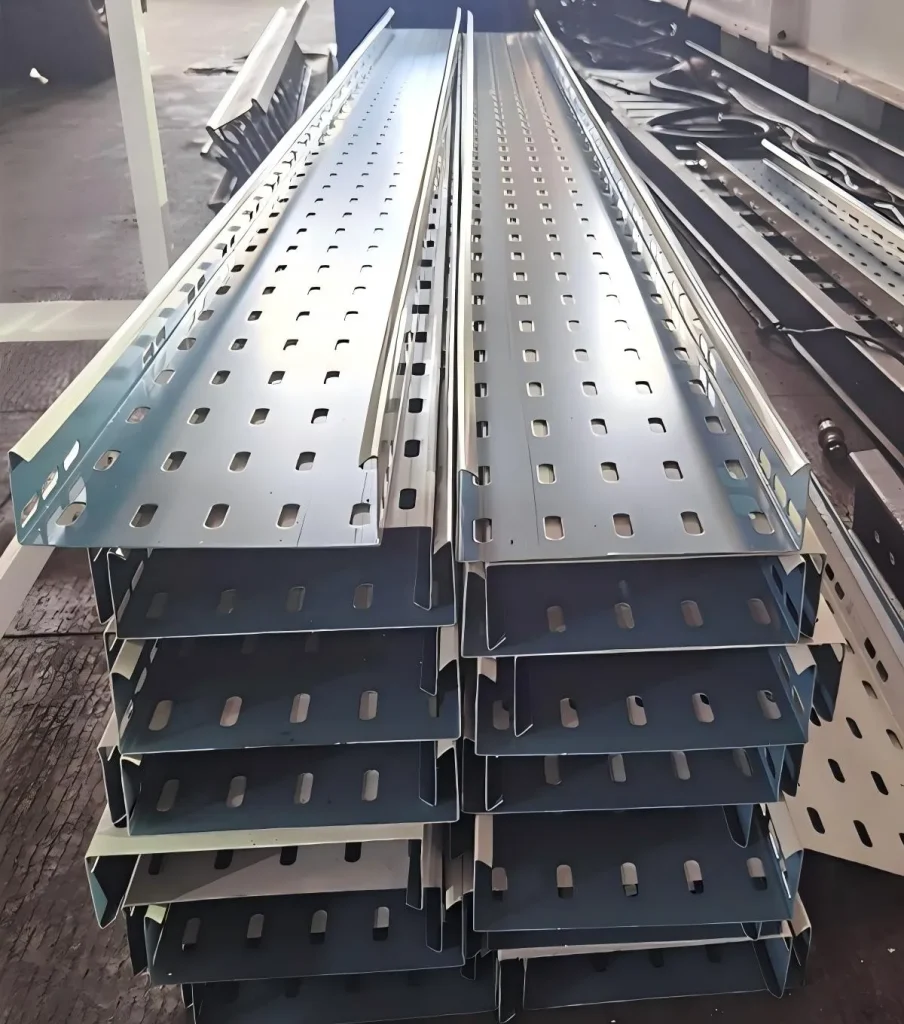

Ladder Type Cable Tray – Heavy Duty Cable Management
What Is a Ladder Type Cable Tray?
Define: two longitudinal side rails joined by horizontal rungs, resembling a flat ladder.
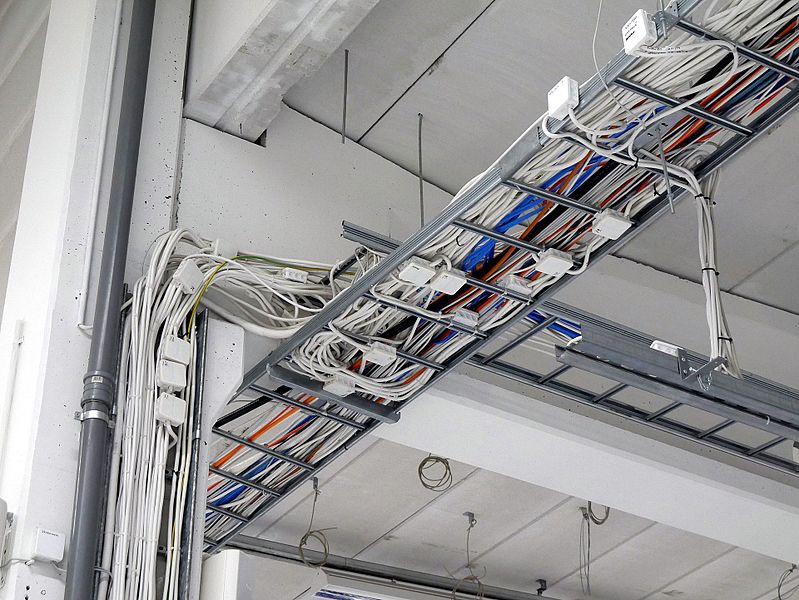
Explain open construction benefits: ventilation, heat reduction, secure tie-down points.
Highlight dual-access advantage — cables accessible from top and underside.
Greatweld Ladder Cable Tray – Technical Specifications
- Width Range: 150 mm to 1200 mm
- Runner Height (H): 50 mm to 150 mm
- Runner Collar (C): 12 mm to 45 mm
- Rung Sizes: 35×15 mm, 40×20 mm, 50×20 mm
- Rung Spacing: 250 mm or 300 mm
- Rung Slot Size: 25×10 mm, 10 mm / 15 mm gap
- Sheet Thickness: 1.6 mm to 3.0 mm
- Standard Lengths: 2500 mm or 3000 mm
- Materials: MS, SS, Aluminum, GI Sheet
- Finishes: HDG, Powder Coated, Pre-Galvanized
Key Advantages of Ladder Type Cable Trays

Superior Ventilation & Heat Dissipation
Open rung construction allows air circulation; prevents thermal buildup in high-density runs.
Easy Cable Access & Maintenance
Cables can be added, rerouted, or replaced without dismantling the tray.

Strong Tie-Down Anchors
Each rung is a natural anchor for cable ties and cleats — critical for vertical/inclined runs.

High Load Capacity
Side rail + rung combination distributes load efficiently; enables wider support spans.
Versatile Material & Finish Options
MS for industrial settings, SS for corrosive environments, aluminum for offshore/weight-critical use.
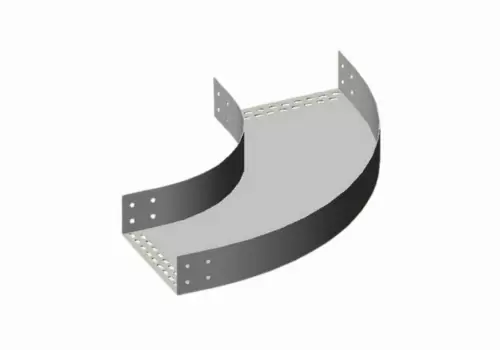
Ladder Type Cable Tray Accessories
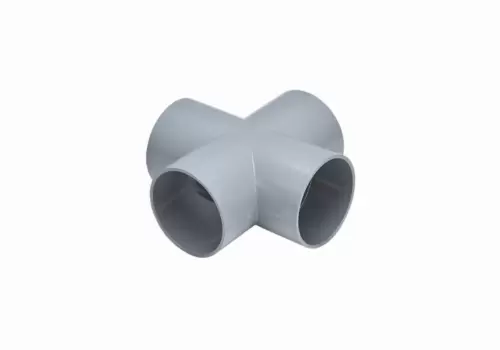
Tee bends, Horizontal bends (30°–90°), Horizontal crosses
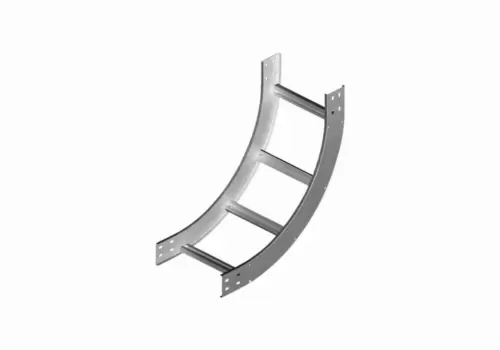
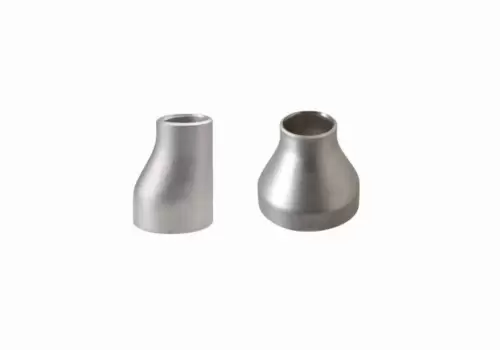
Reducers (right and center offset)
Vertical inner and outer bends (30°–90°)
Splice plates and couplers

Power generation plants & electrical substations

Oil & gas refineries

Steel mills, cement plants, heavy manufacturing

Where Is the Ladder Type Cable Tray Used?

Offshore platforms & marine installations

Large commercial buildings, hospitals, airports

Water treatment & desalination plants
Ladder Tray vs. Perforated Tray — Which Should You Choose?
| Feature | Ladder Tray | Perforated Tray |
|---|---|---|
| Cable load capacity | High | Medium |
| Ventilation | Excellent | Good |
| Suitable for small cables | Less ideal | Ideal |
| Cable accessibility | Top & bottom | Top access only |
| Span between supports | Longer | Shorter |
| Typical application | Power & heavy industry | Control & signal cables |
Frequently Asked Questions (FAQs)
Greatweld ladder trays are available with rung intervals of 250 mm or 300 mm. The choice depends on cable weight and required support frequency.
Yes. Hot-dip galvanized ladder trays are fully suitable for outdoor installation. For coastal or chemically aggressive environments, stainless steel provides enhanced corrosion resistance.
Span depends on tray width, thickness, and load. Typically 1500 mm to 3000 mm are achievable. Greatweld can provide load tables for each configuration.
Ladder trays can carry data cables but are best suited to power cables. For control and signal cables requiring shielding or dust protection, perforated trays or enclosed raceways are more appropriate.
Cables are secured using cable ties, cleats, or saddles fastened to the rungs. On vertical or inclined runs, lashing or cleat systems prevent cable movement.