
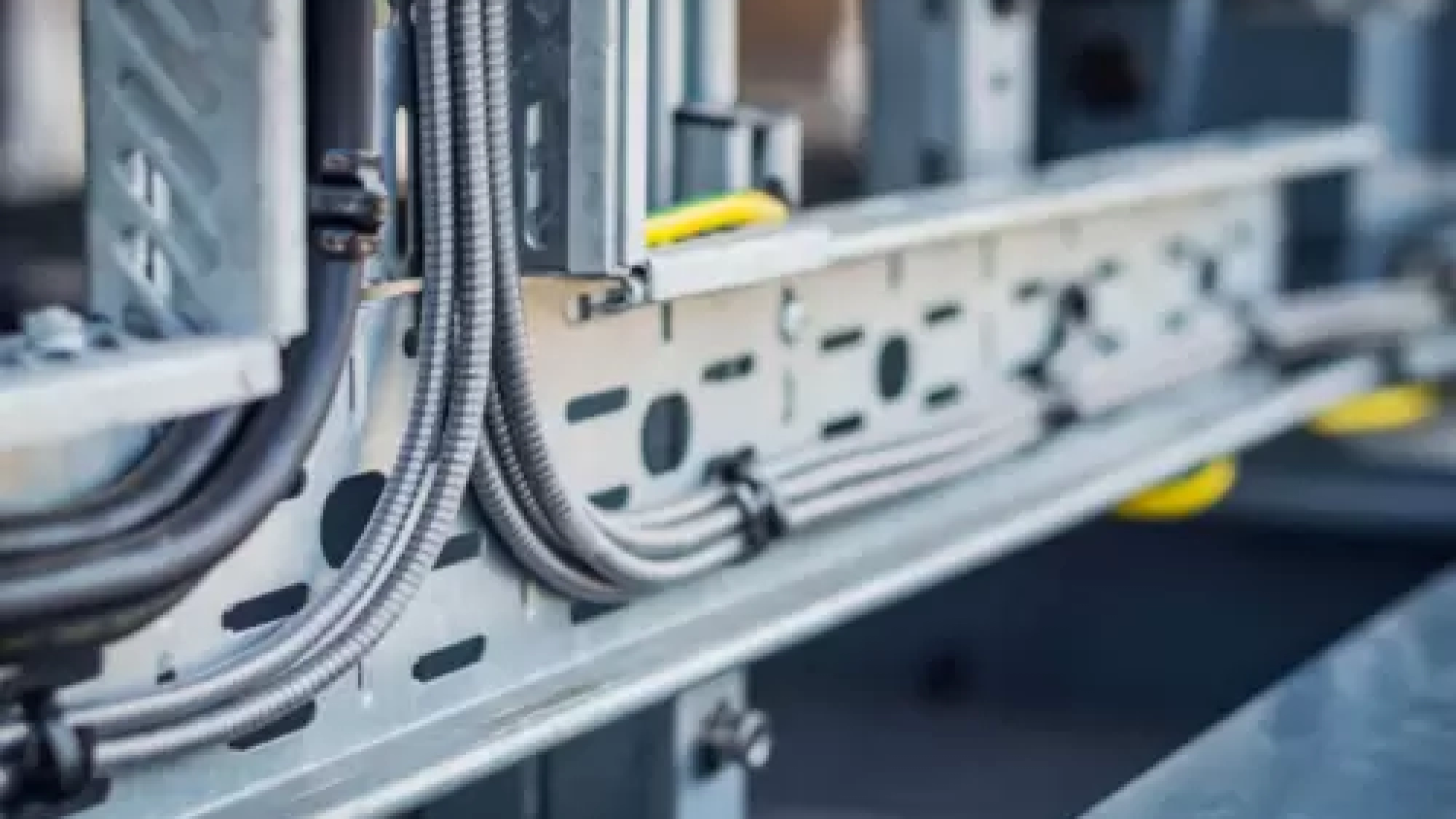
Every facility that runs power, data, or communication cables eventually faces the same question: how do you route hundreds of meters of wiring without turning a plant or building into a tangled fire hazard? The answer almost always comes down to one product category, and to the cable tray manufacturers who engineer it. A well-built cable tray system keeps cables supported, ventilated, and accessible for decades, which is why choosing the right manufacturer matters just as much as choosing the right tray type.
What Cable Trays Do and Why They Matter
A cable tray is a rigid structural framework, usually fabricated from steel, that supports and protects electrical, data, and communication cables as they run through a building or industrial plant. Instead of burying cables inside walls or conduit, a tray system keeps wiring exposed on an open or semi-open path, which makes maintenance, inspection, and future expansion far simpler. For facilities with high cable density, such as factories, data centres, power plants, and commercial complexes, trays are often the only practical way to manage cable volume safely.
Reputable cable tray manufacturers design these systems around three priorities: load-bearing strength, corrosion resistance, and ease of installation. Get any one of these wrong and the consequences range from sagging trays to overheating cables to costly downtime during repairs.
Common Types of Cable Trays
Not every project needs the same tray. Understanding the main categories helps you specify the right one before you even start comparing suppliers.
- Ladder Cable Trays – Two side rails connected by rungs, similar to a ladder. The open design promotes airflow, making it the preferred choice for heavy power cables and high-heat installations.
- Perforated Cable Trays – A solid base with holes punched through it, offering a balance between cable support, ventilation, and protection from falling debris.
- Channel Trays – Narrow, single-piece trays suited to light-duty runs with a small number of cables, typically used in commercial buildings.
Materials Used by Cable Tray Manufacturers
Material choice directly affects how long a tray lasts in the field. Mild steel trays, often hot-dip galvanised, are the standard for industrial environments because they combine strength with corrosion protection at a reasonable cost. Stainless steel is specified where chemical exposure or extreme humidity is a concern, such as in pharmaceutical or marine facilities. Pre-galvanised and powder-coated finishes are common for indoor commercial use where aesthetics and moderate corrosion resistance are sufficient.
Wall thickness, rung spacing, and side-rail depth are engineered based on the expected cable load and support span. This is where experienced cable tray manufacturers add real value: undersized trays sag over time, while oversized ones waste steel and budget.
How to Choose the Right Cable Tray Manufacturer
Specifying a tray type is only half the job. The manufacturer you select determines fabrication quality, finish consistency, and how well the product performs once installed. A few factors worth checking before placing an order:
- In-house fabrication capability – Manufacturers who weld, cut, and finish trays in-house typically offer tighter tolerances and faster turnaround than traders reselling third-party stock.
- Load testing and certification – Ask for load-span data and material test certificates, especially for industrial or infrastructure projects.
- Finish options – Hot-dip galvanising, electro-galvanising, and powder coating should all be available depending on the installation environment.
- Customisation – Bends, tees, risers, and reducers need to be fabricated to match site layouts rather than forcing a project around standard lengths.
- Delivery and project support – For large industrial or infrastructure jobs, a manufacturer who understands site sequencing and can supply accessories alongside the trays saves significant coordination time.
Industries That Rely on Cable Tray Systems
Cable trays are used wherever cable density is high and reliability is non-negotiable. Power plants and substations use ladder trays for heavy electrical runs. Manufacturing plants rely on perforated and ladder trays to route both power and control cabling along production lines. Commercial buildings and data centres lean on perforated and channel trays for structured, low-voltage cabling. Infrastructure projects such as metro systems, airports, and highways increasingly specify hot-dip galvanised tray systems built to withstand decades of outdoor exposure.
Installation and Maintenance Best Practices
Even a well-fabricated tray underperforms if installation cuts corners. Support spacing should follow the manufacturer’s load chart rather than guesswork, and trays should never be loaded beyond their rated fill capacity. Bonding and earthing continuity across tray sections is essential for electrical safety, particularly in industrial settings. Periodic inspection for corrosion, loose fasteners, or overloaded sections extends the working life of the system and avoids unplanned downtime.
Why Fabrication Quality Separates Good Manufacturers from the Rest
Two trays can look identical on a spec sheet and still perform very differently in the field. Weld quality at rung joints, the consistency of the galvanising layer, and the straightness of side rails all affect how a tray handles long-term loading and thermal expansion. This is why facility engineers increasingly favour cable tray manufacturers with their own fabrication shops and quality checks over distributors who simply resell whatever stock is available. A manufacturer that controls the entire process, from raw steel to finished tray, can also respond faster when a project needs non-standard lengths or accessories.
Conclusion
Cable trays may not be the most visible part of a building or plant, but they quietly determine how safely and efficiently every cable inside it performs over the years. Choosing the right type, material, and fabrication partner upfront avoids costly rework later. Greatweld Engineering, a Pune-based structural steel fabricator, manufactures a complete range of cable management systems including ladder and perforated trays, fabricated in-house to suit industrial and infrastructure projects. You can explore the full range on the Cable Management Systems page.
Frequently Asked Questions (FAQs)
Ladder trays use open rungs for maximum ventilation and are best for heavy power cables, while perforated trays have a solid, holed base that offers more support for smaller or lighter cable bundles while still allowing some airflow.
Tray width and depth are calculated from the total cross-sectional area of the cables to be routed, with a recommended fill ratio of around 40–50% to allow for heat dissipation and future cable additions.
Yes. Hot-dip galvanised trays are specifically designed for outdoor and humid environments, offering long-term corrosion resistance compared to plain or pre-galvanised steel.
Most cable tray manufacturers fabricate bends, risers, tees, and reducers to match site drawings rather than restricting projects to standard straight lengths.
Most standard cable trays are manufactured in lengths of 2.5 metres or 3 metres to balance shipping efficiency and installation ease. However, custom lengths can often be specified directly through your choice of cable tray manufacturers to suit unique site conditions.