
Every major construction or infrastructure project relies on structural steel sections that perform reliably under large loads and long spans.
A wide flange beam is the most widely used section for exactly this purpose across bridges, industrial plants, high-rise frames, and renewable energy projects.
The I-shaped cross-section with broad, parallel flanges delivers a strength-to-weight ratio that meets the demands of long-span structural applications.
Greatweld Engineering supplies steel wide flange beams for construction, infrastructure, and renewable energy projects across India.
Our W beam range is available in multiple sizes, material grades, and protective finishes to match project-specific structural requirements.
This guide helps structural engineers and procurement teams understand our product range and select the right wide flange beam specification.
What Is a Wide Flange Beam
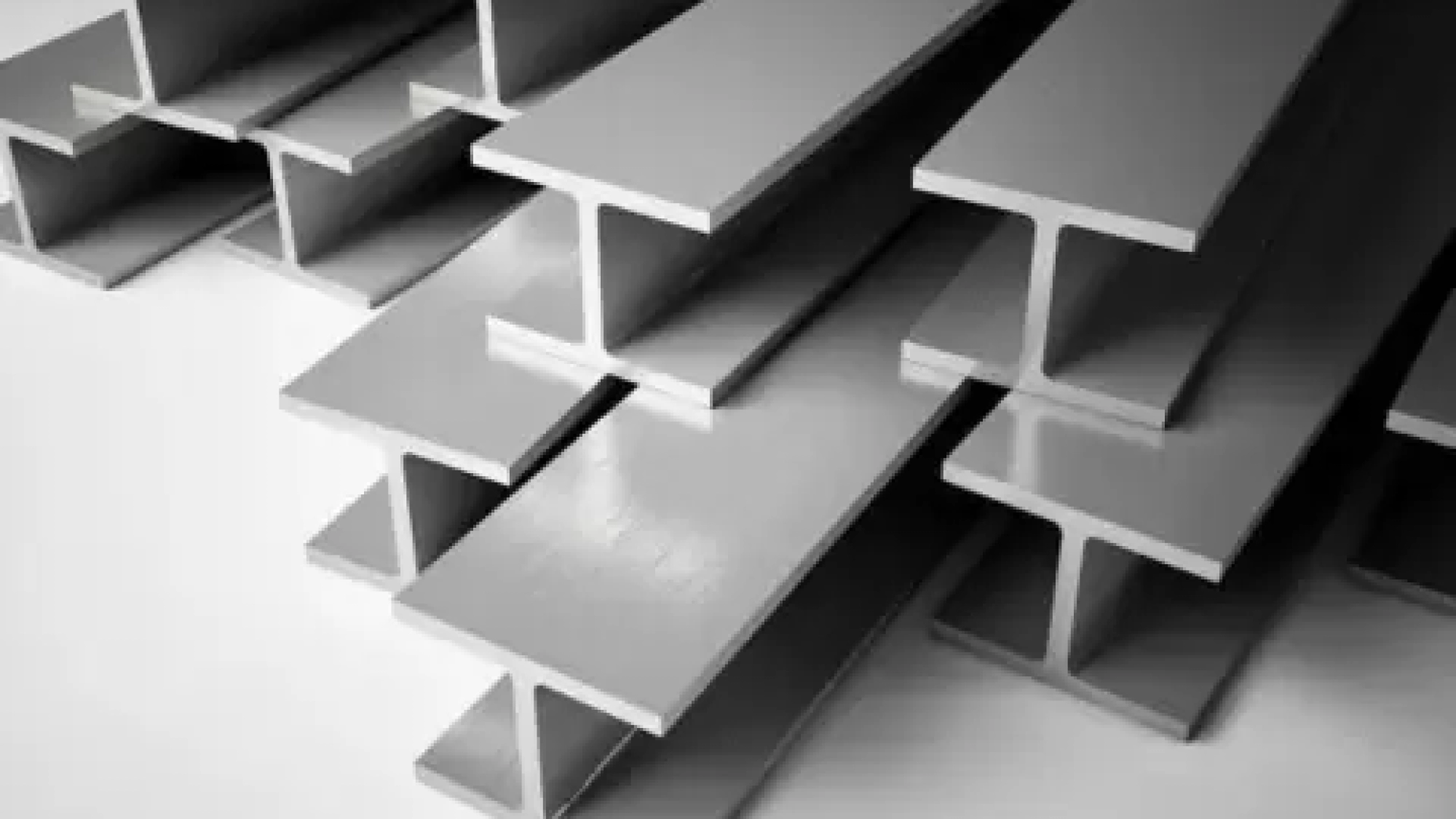
A wide flange beam is an I-shaped structural steel section with broad, flat flanges that are parallel to each other along the full depth of the section.
This geometry differs from standard I-sections where the flanges taper toward the outer edges, reducing the effective flange area.
The parallel, wide flanges of a W beam distribute bending stress more uniformly across the full flange width.
This results in higher bending capacity and lower deflection at equivalent material weight compared to narrower rolled I-sections.
Wide flange beams are also referred to as W beams, H-sections, or UB sections depending on the standard applied and the country of specification.
They are the default structural section for long-span floor beams, bridge girders, crane runway girders, and multi-storey column applications.
Greatweld Engineering Wide Flange Beams: Technical Specifications
Depth range: W beam sections available from 100 mm to 900 mm nominal depth to suit column, primary beam, and crane girder applications.
Flange widths range from 100 mm to 400 mm depending on the section series and structural application.
Web and flange thickness varies by section depth. Heavier sections carry proportionally thicker webs and flanges.
Standard lengths are available in 6 m, 9 m, and 12 m. Custom lengths are fabricated on request.
Material grades available include IS 2062 Grade E250 and Grade E350 as standard. Higher grades are available for specific structural requirements.
Finish options include shot-blasted and primed, hot-dip galvanised, or weathering steel treatment depending on the project environment and service life requirement.
Standards compliance covers IS 12779 for wide flange beam section dimensions, IS 2062 for steel grade, and ASTM A992 for export and multinational projects.
Key Features and Benefits
Superior Strength and Load Distribution
The broad, parallel flanges of a steel wide flange beam distribute bending stress efficiently across the full flange width without the taper-induced stress concentration found in standard I-beams.
This means a W beam can carry heavier loads over longer spans with less deflection at the same structural weight.
For industrial mezzanines, warehouse roof framing, and bridge deck girders where deflection must be minimised, wide flange beam sections consistently outperform narrower alternatives.
Greatweld Engineering supplies each section with dimensional confirmation and grade certificates so structural engineers can verify compliance before erection.
Versatile Applications
A W beam serves multiple structural roles within a single project: as a floor beam, column, crane runway girder, and roof purlin.
This versatility allows project teams to standardise on one section type across multiple structural applications, simplifying procurement and connection detailing.
The same wide flange beam sizes used in a warehouse roof structure can be specified as columns in a multi-storey industrial frame.
Greatweld Engineering supplies steel wide flange beams for diverse applications from industrial plant buildings to solar farm structures and public infrastructure.
Corrosion Resistance and Longevity
Structural steel in Indian outdoor and coastal conditions begins to corrode rapidly without an adequate protective coating.
Greatweld Engineering applies hot-dip galvanising, weathering steel treatment, or primer-and-topcoat paint systems depending on the project environment.
Hot-dip galvanised steel wide flange beams are specified for coastal bridges, port structures, and infrastructure with design service lives exceeding 25 years.
Weathering steel W beam sections develop a stable surface patina in outdoor conditions, eliminating the need for ongoing repainting in appropriate exposure categories.
Customisation and Precision Engineering
Greatweld Engineering supplies wide flange beam sizes in project-specific lengths, grades, and finishes confirmed against client structural drawings.
Connection holes, splice plates, web stiffeners, and bracket fabrications can be incorporated into the beam section before delivery.
This reduces on-site fabrication time and ensures every component arrives ready for direct installation into the structure.
Our structural team reviews project drawings and confirms that the specified section size matches the required load and span before production begins.
Sustainability and Green Energy Impact
Greatweld Engineering produces steel wide flange beams from 100 percent recyclable structural steel using energy-efficient manufacturing methods.
At end of service life, every wide flange beam section can be fully recovered and remelted as raw material, completing the material lifecycle.
W beam sections play a critical structural role in India’s growing solar energy and wind energy infrastructure.
Ground-mounted solar farm structures use wide flange beam columns and support frames to hold panel arrays at the correct tilt angle with minimal land disturbance.
Wind turbine base structures use heavy W beam sections for load transfer between the turbine tower and the foundation system.
Specifying recyclable steel wide flange beams on renewable energy projects supports the full sustainability commitment of the installation from construction through end of life.
Applications
Bridges and highway infrastructure use steel wide flange beams as primary girders, deck cross-beams, and pier cap sections.
High-rise and commercial buildings use W beam sections as floor beams, roof framing members, and structural columns in steel frame construction.
Industrial plants and warehouses rely on wide flange beams for crane runway girders, mezzanine primary beams, and equipment support structures.
Solar farms and wind energy installations across India use W beam sections as structural foundations and elevated support frames for panel arrays.
Railway and heavy infrastructure projects require heavy wide flange beam sizes for platform canopies, overhead pedestrian bridges, and signal gantry frames.
Conclusion
A wide flange beam is one of the most critical structural steel sections in any construction or infrastructure project.
Selecting the right wide flange beam sizes, grade, and finish requires matching the section to actual loads, spans, and environmental conditions.
Greatweld Engineering supplies a full range of steel wide flange beams with in-house finishing, project documentation, and structural team support.
Contact Greatweld Engineering with your load, span, and environment requirements for W beam sizing confirmation and a project quotation.
Frequently Asked Questions (FAQs)
A wide flange beam has broad, parallel flanges that maintain a consistent width from the web to the outer edge. A standard I-beam or ISMB section has tapered flanges that narrow toward the edge. The parallel flanges of a W beam distribute bending stress more uniformly, giving higher load capacity at the same weight.
Greatweld Engineering supplies wide flange beam sizes from 100 mm to 900 mm nominal depth, with flange widths from 100 mm to 400 mm. Standard lengths are 6 m, 9 m, and 12 m, with custom lengths available for project-specific requirements.
IS 2062 Grade E250 and Grade E350 are the standard material grades available. Higher-strength grades and ASTM A992 are available for specific project requirements including export and multinational projects.
Greatweld Engineering offers hot-dip galvanising for outdoor and coastal environments, weathering steel treatment for projects where repainting is not practical, and primer-plus-topcoat paint systems for standard outdoor structural applications.
Yes. W beams with near-equal flange and depth dimensions are commonly used as columns in industrial and commercial steel frames. Their wide flanges provide good resistance to buckling in both principal axes compared to narrower I-sections.