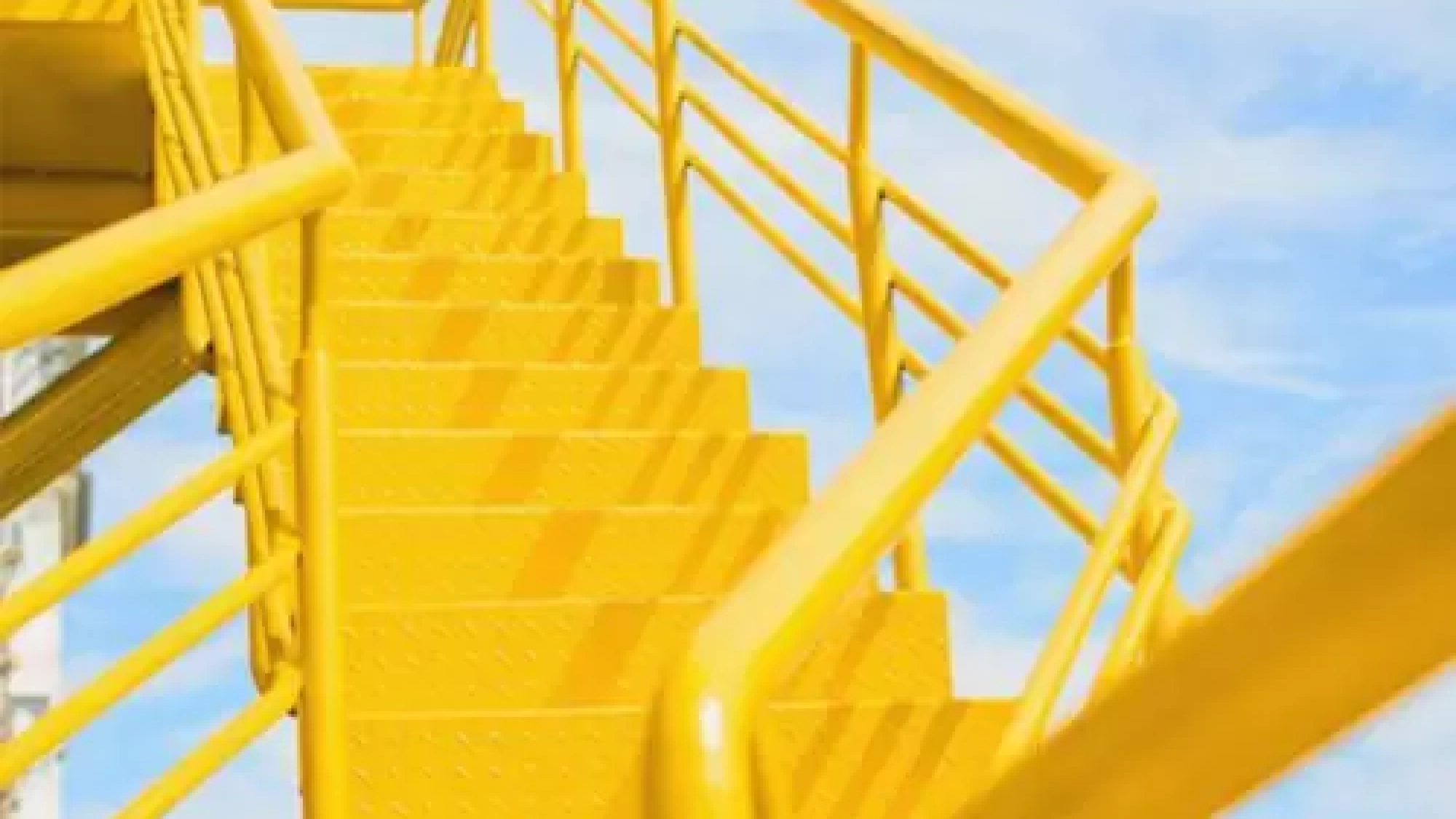
Guard rails are the physical infrastructure that stands between a worker and a fatal fall.
They are installed at every open edge, elevated platform perimeter, roof access walkway, and exposed trench on an industrial or commercial site.
The effectiveness of that protection depends entirely on how well the guard rails were fabricated.
An inadequately welded post, an undersized rail section, or a coating that fails prematurely means the barrier is unreliable.
Greatweld Engineering is a Pune-based guardrail manufacturer with full in-house control over design, fabrication, welding, and surface finishing.
This guide explains the guard rail systems we manufacture, the process behind each type, the standards we comply with, and what to check when selecting a guardrail manufacturer in India.
Why the Guardrail Manufacturer Determines the Quality of Protection
Guard rails are structural safety products, not decorative fittings.
Two guard rails of identical appearance can perform very differently under a lateral load.
The difference lies in post base connection strength, weld quality at rail-to-post joints, steel section size, and coating adhesion.
A guardrail manufacturer who controls fabrication in-house manages all of these variables directly.
A trader reselling third-party stock has no visibility into any of them.
Greatweld Engineering controls every stage of guard rail production from raw steel selection through to documented finished product.
Guard Rail Systems Greatweld Engineering Manufactures
Fixed Welded Guard Rails
Fixed welded guard rails are permanently installed by welding or anchor-bolting posts to the structural floor or frame.
They provide the highest structural rigidity of any guard rail configuration and are specified for all permanent elevated structures.
Typical applications include mezzanine perimeters, process platform edges, rooftop plant walkways, and staircase edge protection.
Greatweld Engineering fabricates fixed guard rails to client drawings with post centres, rail heights, and connection details confirmed before production begins.
Modular Bolted Guard Rails
Modular guard rails use a bolt-together system of posts and rail sections that require no on-site welding to assemble.
This design allows guard rails to be erected quickly and reconfigured as the facility layout changes.
Despite being bolted, modular guard rails meet the same lateral load requirements as welded systems under applicable safety codes.
Greatweld Engineering supplies modular guard rail kits with all hardware required for a complete installation.
Mezzanine Edge Guard Rails
Mezzanine edge guard rails are designed specifically for warehouse and factory mezzanine floor perimeters.
They include integrated self-closing gates at pallet and personnel access points.
Top rail height, post spacing, kick plate provision, and gate locations are all configured to match the mezzanine structure.
Greatweld Engineering fabricates mezzanine guard rail packages directly from client floor plans and structural drawings.
Machine Guarding Barriers
Machine guarding barriers are guard rail systems that create a defined safety perimeter around automated or dangerous equipment.
They prevent unauthorised entry to the machine operational zone and protect maintenance workers during controlled access stops.
These systems use heavier post sections and closer post spacing than standard guard rails to absorb impact from machine operation.
Greatweld Engineering fabricates machine guarding barriers to dimensions specified in the machinery safety risk assessment or machine technical file.
Guard Rail Fabrication Process at Greatweld Engineering
All guard rail production at Greatweld Engineering begins with a detailed review of the client drawing.
Posts are cut to the correct height and base plate connection is welded and prepared for anchor bolt or welded-on installation.
Top rails and mid rails are cut to the post centre spacing and prepared for assembly.
Components are assembled in welding fixtures to hold correct rail height, post alignment, and level before any weld is made.
All welding is completed by certified structural welders following a defined and qualified welding procedure.
Completed guard rail sections are dimensionally inspected and visually checked for weld quality before the surface treatment stage.
Hot-dip galvanising or paint system is applied to the complete fabricated component after all welding and assembly work is finished.
Materials and Finishes for Guard Rails
All Greatweld Engineering guard rails are fabricated from IS 2062 Grade E250 mild steel as the standard structural grade.
Hot-dip galvanised finish applied per IS 2629 is the standard surface treatment for all outdoor and industrial guard rail installations.
Primer-and-topcoat paint systems are available for indoor installations or where specific colour requirements apply.
All surface treatments are applied after full fabrication so every weld, hole, and cut surface receives complete and uniform protection.
Safety Standards That Apply to Guard Rails in India
Guard rails in Indian industrial facilities must comply with the Factories Act 1948 and the relevant state factory safety rules.
IS 15652 specifies a minimum top rail height of 1050 mm above the walking surface.
The guard rail system must resist a lateral force of at least 90 kg applied at the top rail in any direction.
Toe boards of minimum 100 mm height are required wherever personnel occupy the area below an elevated platform edge.
Mid rails must be positioned midway between the top rail and the floor surface.
Greatweld Engineering designs all guard rail systems to IS 15652 requirements as the standard baseline.
OSHA 1910.29 compliance is available for international and multinational projects requiring dual-standard documentation.
Industries and Applications
Power plants and substations use fixed guard rails on maintenance platforms, transformer bays, and cable bridge walkways.
Manufacturing and process industries rely on guard rails at every open mezzanine edge, platform perimeter, and open pit edge.
Warehouses and logistics centres use modular guard rails for rack protection, pedestrian route separation, and mezzanine edge safety.
Construction projects specify temporary guard rails for edge protection at slab openings and permanent guard rails on rooftop mechanical plant areas.
Public infrastructure projects including metro stations, airports, and bridges require guard rail systems that comply with both structural load and safety code requirements.
Conclusion
Guard rails are fundamental safety infrastructure, and the guardrail manufacturer who supplies them determines whether that protection performs when it matters.
Greatweld Engineering is a Pune-based guardrail manufacturer with complete in-house control over design, fabrication, welding, and finishing.
Every guard rail system we supply is fabricated from IS 2062 certified mild steel, designed to IS 15652, and finished to the standard required for the installation environment.
Contact Greatweld Engineering with your site drawings, platform dimensions, and compliance requirements to receive a guard rail project quotation.