The main difference in electro forged vs press-locked grating is how the cross bars are joined to the bearing bars. Electro forged grating fuses them by resistance forge welding. Press-locked grating locks them mechanically under pressure. Neither is automatically stronger. Load capacity comes from bar size, spacing, span and the manufacturer’s load table. This guide helps you compare both before you buy MS grating for a project.
What Is Electro Forged Grating?
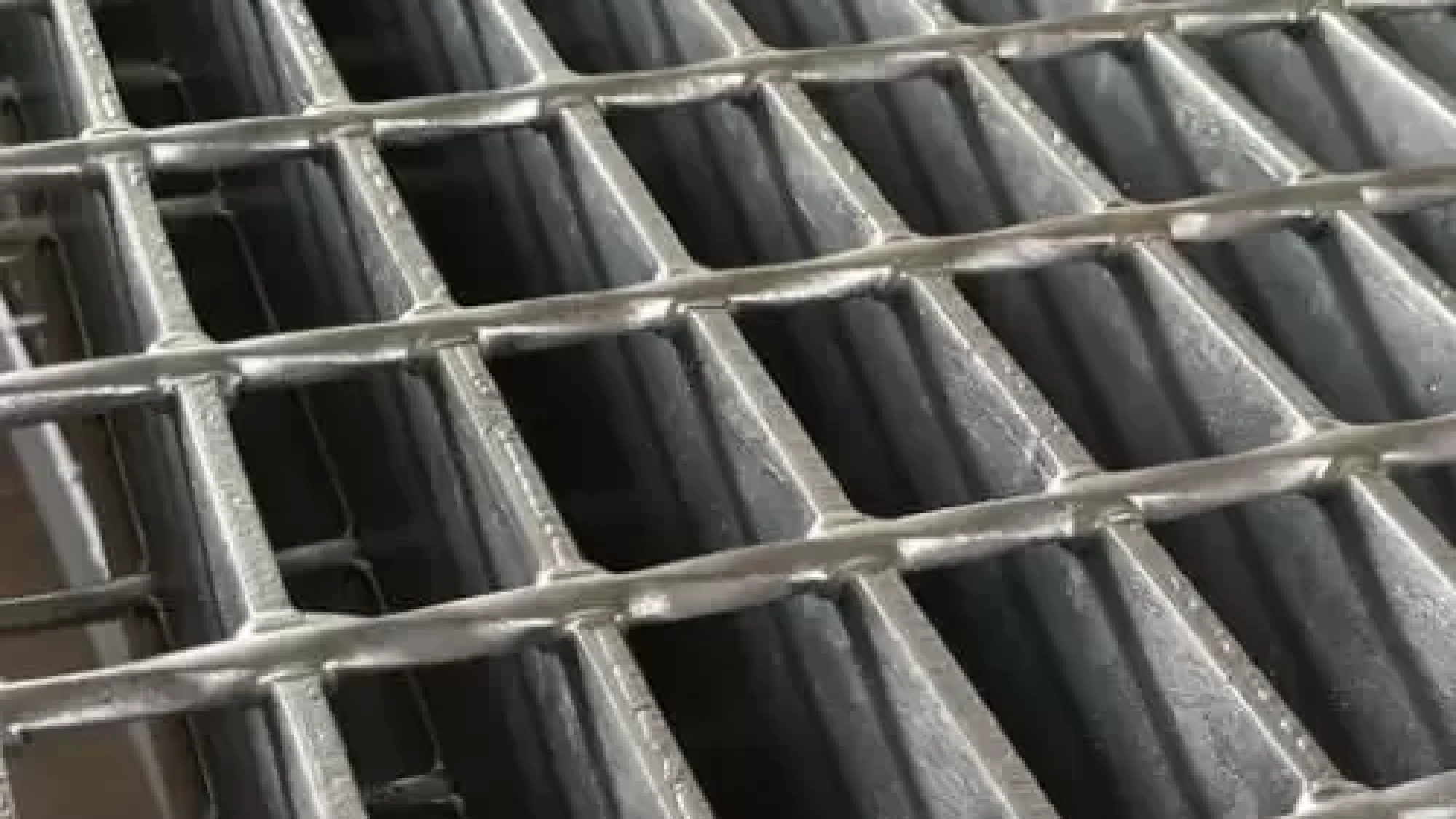
Electro forged grating is made by placing cross bars across bearing bars and joining every crossing with electric resistance forge welding. Heat and pressure fuse the steel at the joint, with no added filler. The result is a panel with welded joints at each intersection.
What Is Press-Locked Grating?
Press-locked grating uses bearing bars that are notched. Cross bars are fitted into the notches, and the joint is locked by pressing, so no welding is needed at the crossing. The mechanical lock holds the bars in position and forms the panel.
How Do the Manufacturing Processes Differ?
The two methods follow different steps, and each has its own process controls.
- Electro forged grating. Bars are positioned, then welded at each crossing under heat and pressure. Weld quality and consistent bar alignment are the key controls.
- Press-locked grating. Bars are notched, assembled and pressed to lock the joint. Notch accuracy and lock tightness are the key controls.
Because the joining methods differ, the quality checks differ as well. Ask each supplier how they inspect joints and what records they keep.
How Do They Compare Structurally?
Welded joints can help a panel act as one stiff unit, which supports load sharing between bars. Press-locked joints hold bars in place mechanically, and the stiffness of the panel depends on the quality of the lock and the cross bar section. These are general tendencies, not guarantees.
Load behaviour in practice depends on the bearing bar depth and thickness, bar pitch, material grade, clear span and support conditions. Two panels of the same construction type can carry very different loads. Two panels of different construction types can also be designed for similar duty. Always read the manufacturer’s load table for the exact product. Do not rank one method above the other without it.
Dimensional consistency matters too. Check how each supplier controls bar alignment, pitch and panel squareness, because these affect fit-up on site. Ask for dimensional inspection records for either construction.
How Do Material Grade, Bar Size and Span Affect Selection?
Most industrial grating is made from mild steel, which is why buyers often search for MS grating. The grade matters, because it sets the stress the steel can take. Ask the supplier to state the grade in writing and provide test certificates.
Then work through the geometry. Bearing bar depth and thickness set the stiffness. Bar pitch decides how many bars share the load. Clear span has the strongest effect, because a longer span lowers the permitted load and raises deflection. A shorter span or a deeper bar can solve a failing check for either construction type. This is why the same grade of steel can give different results in different panels.
Appearance, Finish and Fabrication
Press-locked panels often present a neat, flush surface, which some public and architectural areas prefer. Electro forged panels have a practical industrial look and are common on process plant platforms. Both can be cut, banded and drilled, but cut outs affect edge support and load paths. Share drawings for any non-standard shape so the supplier can confirm the fabrication method.
Galvanising and Corrosion Protection
Both types can be supplied with a protective finish. Hot dip galvanising is common where grating is used outdoors or in humid and corrosive areas. Confirm with the supplier that the chosen construction suits the finish you need, and ask which standard and coating thickness records apply. Corrosion life depends on the environment and coating quality, not only on the grating type.
Where Is Each Type Used?
Electro forged grating is widely used on industrial platforms, walkways, trench covers and stair treads in sectors such as oil and gas, petrochemicals and power. Press-locked grating is often considered for walkways, mezzanines and areas where a uniform appearance matters. Either may suit a given project when the design loads and specification are met. The project specification has the final say.
Comparison Table
| Aspect | Electro forged grating | Press-locked grating |
| Manufacturing method | Resistance forge welding at each crossing | Mechanical pressing of cross bars into notched bearing bars |
| Construction | Fused joints | Locked joints without welding |
| Structural characteristics | Welded joints can aid load sharing | Stiffness depends on lock quality and cross bar section |
| Load capacity considerations | Set by bar size, pitch, span and the load table | Set by bar size, pitch, span and the load table |
| Finish and corrosion protection | Can be galvanised or painted as specified | Can be galvanised or painted as specified |
| Applications | Industrial platforms, walkways, covers, stair treads | Walkways, mezzanines, areas where appearance matters |
| Specification requirements | Steel grade, bar size, pitch, finish, documents | Steel grade, bar size, pitch, finish, documents |
How to Decide Between the Two
- Define the design load, clear span and any wheel or point loads.
- Check which constructions the project specification allows.
- Request load tables for both options and compare permitted load and deflection.
- Compare finish, documentation and inspection offered.
- Consider appearance, fabrication needs and delivery time.
- Have the project engineer approve the final selection.
Common Selection Mistakes
- Assuming one construction is always stronger.
- Selecting by panel size without a load table.
- Ignoring bar pitch and cross bar details.
- Skipping the finish and corrosion check for the site environment.
- Not stating the grating type in the purchase order.
How Greatweld Can Support Your Selection
Greatweld’s website lists electro forged grating and manual grating products. Review both pages to compare options. If you are considering press-locked grating, ask the team whether it can be supplied for your enquiry. Share your loads, spans, finish and documentation needs, and the team can confirm what suits your project.
Frequently Asked Questions (FAQs)
Electro forged grating joins cross bars to bearing bars by resistance forge welding. Press-locked grating joins them by mechanical pressing in notched bars. The joining method differs, while load capacity still depends on the full design and load table.
No. Strength depends on bearing bar size, pitch, material, span and support conditions. Compare the manufacturer’s load tables for the specific panels instead of relying on the construction type.
Both are commonly supplied with protective finishes, including hot dip galvanising. Confirm with the supplier that the chosen construction suits the finish, and ask for the standard and coating records.
MS grating means mild steel grating, and mild steel can be used for either construction. Availability depends on the supplier, so confirm which types and sizes can be offered for your order.
Ask for load tables, steel grade certificates, joint inspection methods, finish standards and sample documentation. Also confirm bar size, pitch, delivery time and whether the type meets your project specification.