
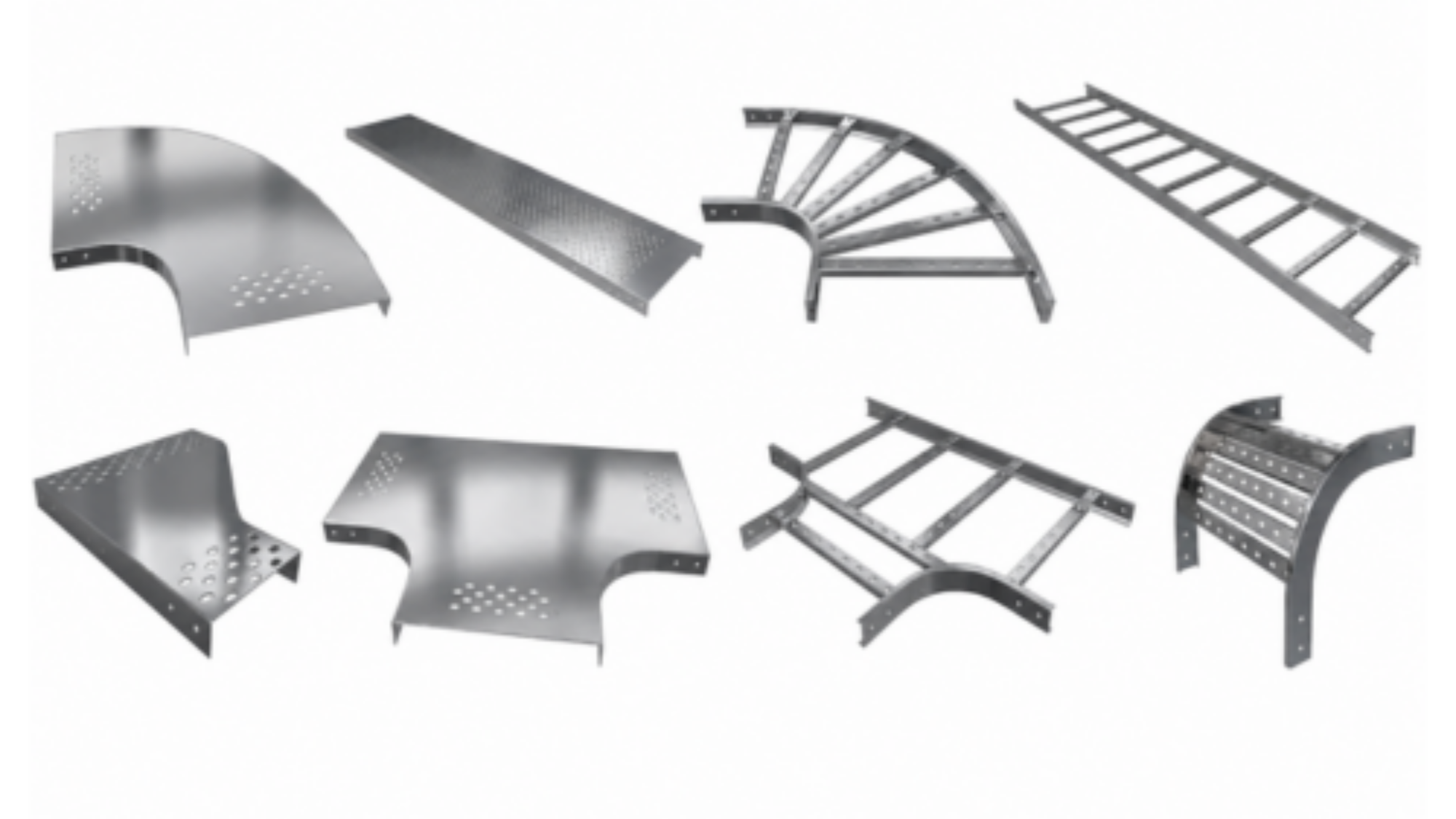
Walk through any power plant, commercial facility, or data center, and you will see miles of structured electrical support running along ceilings and walls. Choosing between a perforated cable tray and a ladder type cable tray determines whether your cables stay safe, cool, and easily accessible or end up sagging, overheating, and deteriorating prematurely. While both products organize and support electrical lines, they serve distinctly different load, heat dissipation, and cable protection requirements.
This comprehensive buying guide breaks down what each tray type offers, how they compare, where they perform best, and what to look for before finalizing your project specifications. Whether you are an electrical contractor, project engineer, or procurement specialist, this guide provides the exact insights you need to select the ideal cable management system.
What Is a Perforated Cable Tray?
A perforated cable tray is a continuous sheet metal channel featuring small, uniformly punched slots across its bottom and side rails. It is specifically engineered to support light to medium-duty electrical, instrumentation, and control wiring while allowing moderate airflow.
These trays provide a smooth, flat surface that supports flexible cables, preventing sagging between fixed points. Compliant with international standards like IEC 61537:2023, perforated cable tray units effectively dissipate heat through their ventilated slots while protecting wires from small debris and physical contact. They are manufactured from materials such as Mild Steel (MS), and Aluminium, with finish options including Hot Dip Galvanized, Pre-galvanized, Powder Coated, and Painted finishes.
What Is a Ladder Type Cable Tray?
A ladder type cable tray consists of two longitudinal side rails connected by individual cross rungs, giving it a ladder-like appearance. It is designed specifically for heavy-duty applications carrying large volumes of high-voltage power cables.
The open-rung structure delivers maximum natural ventilation and heat dissipation, which is vital for heavy power distribution lines that generate substantial heat during operation. Like perforated models, a high-quality ladder type cable tray complies with IEC 61537:2023 standards and supports both welded and bolted configurations. Its high load-bearing capacity makes it the primary choice for heavy industrial plants, data centers, and power utilities.
Perforated Cable Tray vs Ladder Type Cable Tray: Key Differences
While both systems route cables overhead or underground, their structural design creates distinct performance advantages:
- Structure & Ventilation: A ladder type cable tray provides maximum airflow around all sides of the cables due to its open-rung design, whereas a perforated cable tray offers partial shielding with controlled bottom ventilation.
- Cable Support: A perforated cable tray provides a near-continuous baseline, making it ideal for thin, flexible instrumentation wires. Conversely, a ladder type cable tray relies on rungs spaced at specific intervals, perfect for rigid, thick power cables.
- Load Capacity: Ladder trays handle massive structural weight over longer spans, while perforated trays are optimized for light to medium-duty distribution.
Key Features of Modern Cable Management Systems
Optimized Ventilation & Heat Dissipation
Both a perforated cable tray and a ladder type cable tray prevent heat accumulation. Allowing heat to escape maintains cable current rating (ampacity) and prevents insulation degradation over time.
High Structural Strength & Material Options
Industrial trays are fabricated using high-grade Mild Steel (MS), or lightweight Aluminium. This ensures high tensile strength and long-term dimensional stability under heavy loads.
Corrosion-Resistant Protective Coatings
From Pre-galvanized (IS-277) to Hot Dip Galvanized (IS-2629) and custom Powder Coating, protective finishes shield metal trays against rust, chemicals, and outdoor weathering.
Versatile Accessory Ecosystem
System components include horizontal bends, vertical bends, crosses, tees, reducers, and coupler plates. These accessories enable smooth directional changes and seamless structural transitions across complex layouts.
Sustainable and Eco-Friendly Design
Modern cable trays are built from 100% recyclable metals. Their open structures maximize natural air cooling, improving electrical efficiency and supporting low-carbon, sustainable industrial construction.
Benefits of Installing Quality Cable Trays
Choosing the correct cable management system delivers measurable operational advantages:
- Enhanced Electrical Safety: Organized routing eliminates mechanical strain and reduces short-circuit risks.
- Simplified Maintenance: Open structures allow technical teams to quickly trace, inspect, and replace cables.
- Extended Cable Lifespan: Proper support prevents sharp bends, sag stress, and thermal damage.
- Cost Efficiency: Durable galvanized trays resist corrosion, eliminating frequent replacement costs.
Common Industrial Applications
Power Plants & Utilities: Heavy-duty ladder type cable tray runs carry high-voltage power distribution lines over long distances.
Manufacturing Facilities & Factories: Perforated cable tray networks route control cables, automation wiring, and machinery power lines.
Data Centers & IT Hubs: Organized trunking and ladder systems manage high-density fiber and networking infrastructure.
Commercial Buildings & Airports: Ventilated trays support lighting, HVAC controls, and security systems in overhead plenums.
Factors to Consider Before Purchasing
Cable Weight & Span Distance
Calculate the total weight per meter of your cable bundle. Heavy cables over wide structural gaps require a robust ladder type cable tray.
Operating Environment
Outdoor, chemical, or marine environments mandate Hot Dip Galvanized finishes to prevent premature corrosion.
Dimensional Requirements
Cable tray systems are typically available in widths ranging from 150mm to 1000mm, heights from 40mm to 150mm, and material thicknesses up to 3.0mm. Select dimensions that leave at least 20-30% expansion space for future cable additions.
Installation & Maintenance Tips
- Check structural support frames and brackets before mounting cable tray runs.
- Use corrosion-resistant fasteners and coupler plates to ensure continuous electrical grounding and rigid joints.
- Avoid overfilling trays beyond specified load and fill capacity limits.
- Conduct annual checks for physical damage, loose connections, or surface rust, applying touch-up galvanizing paint where necessary.
Conclusion
Selecting between a perforated cable tray and a ladder type cable tray depends on your specific load, airflow, and cable protection requirements. Whether you need maximum ventilation for high-voltage power lines or continuous support for delicate control wiring, using high-quality cable management systems ensures safety, efficiency, and long-term reliability. For engineers and contractors seeking dependable, IEC-compliant cable management solutions, Greatweld Engineering manufactures a comprehensive range of perforated trays, ladder-type systems, and precision-engineered accessories built for demanding industrial environments. You can explore their complete product lineup and request a customized quote directly through Greatweld Engineering.
Frequently Asked Questions (FAQs)
A perforated cable tray features a continuous perforated bottom for flexible cables requiring extra support, while a ladder type cable tray uses open rungs for heavy-duty power cables requiring maximum ventilation.
Cable management systems are manufactured from high-grade Mild Steel (MS),and Aluminium, with finish options like Hot Dip Galvanized, Pre-galvanized, and Powder Coated.
Yes. Hot-Dip Galvanized (IS 2629) cable trays are specially treated to resist corrosion, making them suitable for outdoor installations, industrial environments, coastal areas, and other harsh conditions.
Essential accessories include horizontal and vertical bends, tees, crosses, reducers, and coupler plates, which enable smooth directional routing and secure connections.
Adequate air circulation prevents heat buildup in current-carrying cables, ensuring electrical safety, maintaining ampacity, and extending overall cable service life.