
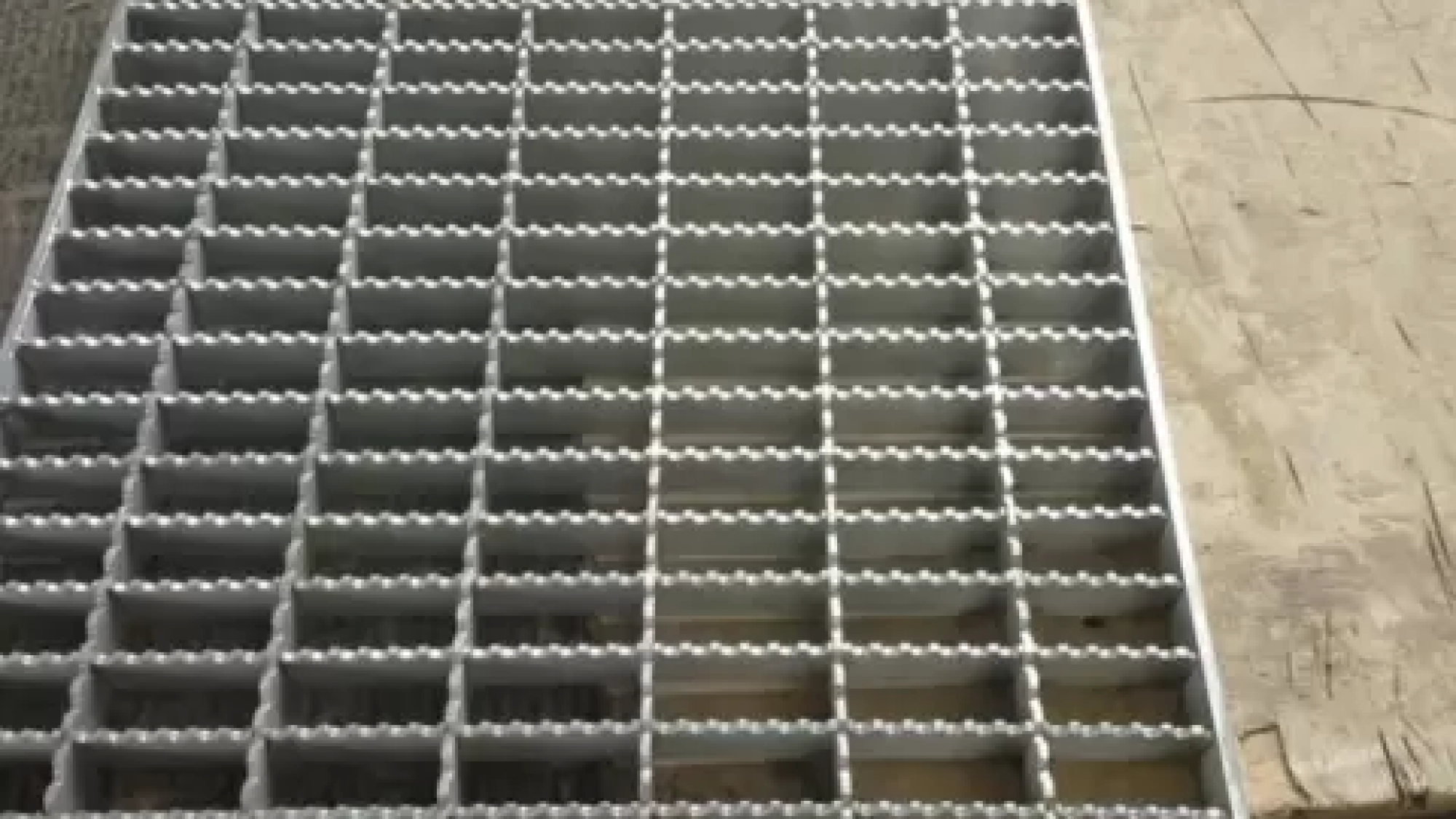
Steel grating load capacity is the load a grating panel can carry over a given clear span within allowed stress and deflection limits. It is not one fixed number. It changes with bar size, bar spacing, span, support conditions and load type. The reliable source is the manufacturer’s load table, read against your actual project loads.
This guide supports specification work. It does not replace engineering design. Final selection must be verified against project loads, support conditions, applicable standards and manufacturer-approved tables.
What Does Steel Grating Load Capacity Mean?
Three terms often get mixed up. Load capacity is the load the panel can resist before reaching a limit state. Allowable load is the portion of that load a table permits in service, often after applying design factors. Deflection is how much the panel bends under a load. A panel can be strong enough and still bend too much for comfort or safety, so you need to check both.
Which Types of Load Apply to Gratings?
- Uniformly distributed load, spread evenly over the panel, such as foot traffic or stored material.
- Concentrated load, applied at a point or small area, such as a heavy tool or a support leg.
- Wheel load, a concentrated load that moves, such as a trolley or a vehicle.
- Dynamic or impact load, caused by movement, dropping or vibration.
A table value for a distributed load does not cover a point or wheel load. Check each load type separately.
Which Factors Change Load Performance?
- Bearing bar depth, since deeper bars are stiffer and stronger over the same span.
- Bearing bar thickness, which adds section strength.
- Bar spacing, since closer bars share the load across more members.
- Material grade, which sets the stress the steel can take.
- Clear span and support conditions, including how far the panel sits on its supports.
- Cross bars, which help spread concentrated loads between bearing bars.
- Cut outs and banding, which change the load path near openings.
How Do You Read a Grating Load Table?
A typical table lists bar size and pitch, then span values with matching permitted loads and deflections. Some tables also show a permitted concentrated load. Before using the numbers, check four points.
- The units and whether loads are per square metre or per panel width.
- Whether the permitted load already includes design factors.
- The deflection basis, such as a limit set by span or an absolute value.
- The support length and the standard or method the table follows.
Use the row for your exact bar size, pitch and span. Do not interpolate or borrow a value from another product unless the manufacturer allows it.
Worked Example With Hypothetical Values
The values below are hypothetical and for explanation only. They are not Greatweld product specifications and must not be used for design.
| Clear span | Permitted distributed load | Deflection at that load | Check against limit |
| 800 mm | 1,500 kg per square metre | 2.0 mm | Hypothetical |
| 1,000 mm | 1,000 kg per square metre | 3.1 mm | Hypothetical |
| 1,200 mm | 700 kg per square metre | 4.5 mm | Hypothetical |
Suppose a design needs 600 kg per square metre over a 1,000 mm span with a project deflection limit of 4 mm. The 1,000 mm row permits 1,000 kg per square metre with 3.1 mm deflection, so it passes both checks. The 1,200 mm row permits 700 kg per square metre but shows 4.5 mm, which exceeds the limit. The result shows why a panel can meet the load check and still fail the deflection check. Wheel and point loads would then need their own check.
Why Do Deflection Limits Matter?
Excess deflection can feel unsafe underfoot, loosen fixings and affect equipment. The limit is set by the project specification or applicable standard. Some limits are a fraction of the span and others are a fixed value, so confirm which one applies. If a panel fails the limit, options include a deeper bar, closer bar pitch or a shorter span.
Pedestrian Loading Compared With Industrial Loading
Pedestrian areas mainly see foot traffic, which is usually modelled as a distributed load. Industrial areas can add stored material, maintenance equipment, trolleys and vehicles. These bring concentrated and wheel loads, impact and vibration. Treat industrial areas as a separate case and ask the designer which loads apply.
Also note that tables usually assume the panel rests fully on its supports. If the real support is shorter, narrower or uneven, the permitted load can drop. Report the real support details to the supplier.
Platforms, Walkways, Stair Treads and Flooring
- Platforms need checks for equipment, maintenance loads and spans between beams.
- Walkways need a distributed load check and a deflection check for comfort.
- Stair treads need a point load check on the tread and a check of the fixing to the stringer.
- Industrial flooring needs checks for wheel loads, dynamic loads and the support arrangement.
Step-by-Step Checklist for Selecting Steel Grating
- Step 1. List all loads, including distributed, concentrated, wheel and dynamic loads.
- Step 2. Confirm the clear span and support conditions.
- Step 3. Note the project deflection limit and applicable standard.
- Step 4. Get the manufacturer’s table for the exact product.
- Step 5. Match bar size and pitch to span, then check permitted load and deflection.
- Step 6. Check concentrated and wheel loads separately.
- Step 7. Review cut outs, banding and fixings.
- Step 8. Have the project engineer verify the final selection.
Common Mistakes When Selecting Gratings
- Choosing by panel size or bar depth alone.
- Assuming one table applies to every manufacturer or every MS grating product.
- Checking strength but not deflection.
- Using a distributed load value for a wheel load.
- Ignoring cut outs near supports.
How Greatweld Can Support Specification-Based Selection
Greatweld lists electro forged grating and manual grating products, and you can see general product information on the steel grating page. Send your loads, span, support details, deflection limit and finish requirement with your enquiry. Load tables, sizes and availability are confirmed for the actual product, and the final selection stays with your project engineer.
Frequently Asked Questions (FAQs)
Manufacturers calculate it from bar section properties, span, support conditions and allowable stress, then publish the results in load tables. Use the table for the exact product and have an engineer verify the final selection.
A uniformly distributed load spreads evenly over the panel. A concentrated load acts at a point or small area. Each needs its own check, because a table value for one does not cover the other.
Deeper bars are generally stiffer and stronger over the same span. Still, compare the manufacturer’s table for the exact bar size and pitch, since thickness, spacing and span also matter.
The limit comes from the project specification or applicable standard. It may be a fraction of the span or a fixed value. Ask the designer which one applies before selecting a panel.
No. Load tables are specific to the manufacturer, product, bar size, pitch and method used. Use the table for the actual MS grating you plan to order.